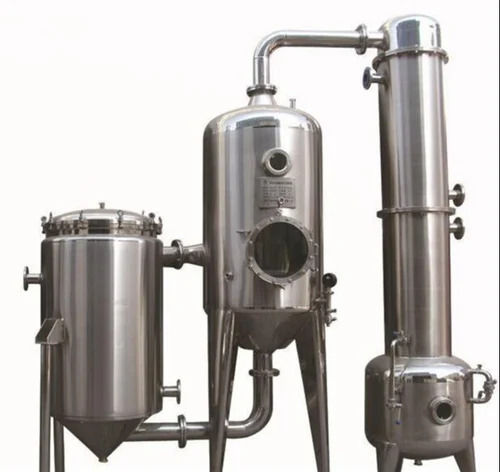
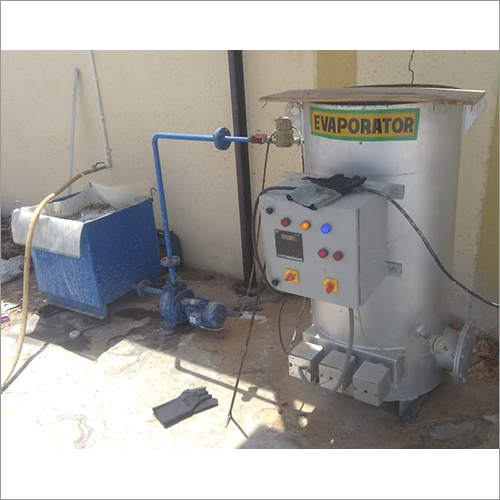
INDUSTRIAL SINGLE EFFECT EVAPORATOR
50000 INR/Unit
Product Details:
- Pressure Atmospheric to moderate vacuum
- Sealing Mechanical seal
- Condition New
- Process Single effect evaporation
- Power Source Electric
- Application Industrial liquid concentration
- Material Stainless steel (SS304/SS316)
- Click to View more
X
INDUSTRIAL SINGLE EFFECT EVAPORATOR Price And Quantity
- 50000.00 - 500000.00 INR/Unit
- 50000 INR/Unit
- 10 Unit
INDUSTRIAL SINGLE EFFECT EVAPORATOR Product Specifications
- 15 kW to 75 kW
- Stainless steel (SS304/SS316)
- Customized as per requirement
- Atmospheric to moderate vacuum
- Industrial liquid concentration
- Electric
- 380 V
- New
- Varies depending on capacity
- Single effect evaporation
- Mechanical seal
- Steam heating
- Polished
- CIP (Clean-in-place)
- Shell and tube condenser
- PLC based automation
- 15+ years
- Effluent treatment, food, chemical, pharmaceutical industries
- 500 L/hr to 10,000 L/hr
- Skid mounted
- Continuous
INDUSTRIAL SINGLE EFFECT EVAPORATOR Trade Information
- Cash Advance (CA), Cash in Advance (CID)
- 1 Unit Per Month
- 7 Days
- , All India, South India, Central India, West India, North India, East India, Gujarat, Karnataka, Kerala, Lakshadweep, Mizoram, Meghalaya, Manipur, Andhra Pradesh, Bihar, Chandigarh, Daman and Diu, Goa, Jharkhand, Odisha, Punjab, Assam, Delhi, Dadra and Nagar Haveli, Andaman and Nicobar Islands, Arunachal Pradesh, Chhattisgarh, Haryana, Himachal Pradesh, Jammu and Kashmir, Madhya Pradesh, Maharashtra, Nagaland, Rajasthan, Sikkim, Tamil Nadu, Telangana, Tripura, Pondicherry, Uttar Pradesh, Uttarakhand, West Bengal
Product Description
The purpose of evaporation is to vaporize the solvent in order to enrich the solute in the solution.
At the end of the operation the substance recovered is known as the concentrate.
A conventional evaporator is heated by steam which condenses and transmits heat energy to the solution to be evaporated.
As this solution boils it in turn releases vapor which may
Either be condensed in a condenser, in which case the process is known as single effect evaporation.
Or be used to heat another evaporator, in which case it is known as multiple effect.
In theory an unlimited number of evaporators may be associated in series in this way.
Advanced Automation & Efficiency
Equipped with PLC-based control systems, this single effect evaporator ensures precise operation and consistent results. The automation system monitors process parameters, reducing human error and optimizing steam and power consumption, which leads to energy savings and increased productivity for industrial users.
Versatile Industrial Applications
This evaporator is engineered for a broad range of industries, including food, chemicals, pharmaceuticals, and effluent treatment. Its continuous feed mechanism supports uninterrupted operations, making it suitable for high-volume, round-the-clock production needs where efficiency and product quality are crucial.
Durable Design & Easy Maintenance
Fabricated from corrosion-resistant SS304/SS316 stainless steel, the evaporator promises long-term durability and a polished, easy-to-clean surface. The integrated Clean-in-place (CIP) system reduces downtime and labor, ensuring hygiene standards are met effortlessly in demanding processes.
FAQ's of INDUSTRIAL SINGLE EFFECT EVAPORATOR:
Q: How does the single effect evaporator concentrate industrial liquids?
A: The evaporator uses steam heating to transfer heat to the liquid feed inside its shell and tube structure, causing the solvent (typically water) to evaporate. This process leaves behind a concentrated solution, ideal for applications requiring reduced liquid volume and increased product concentration.Q: What types of industries benefit from using this evaporator model?
A: This evaporator is widely used in effluent treatment, food processing, chemical manufacturing, and pharmaceutical industries. Its robust design and automation features make it suitable for any operation that requires reliable, continuous concentration of liquid products.Q: When should the evaporator be cleaned, and how is cleaning performed?
A: Cleaning should be conducted at intervals specified by your process requirements or whenever residue is detected. The integrated CIP (Clean-in-place) system allows for automated cleaning without dismantling, ensuring minimum downtime and optimal hygiene.Q: Where can this evaporator be installed within an industrial facility?
A: The unit is skid mounted, allowing flexible installation in various plant locations. Its compact and customizable dimensions ensure it can be tailored to fit available space in both new and existing facilities.Q: What is the benefit of having a PLC-based automation system in this evaporator?
A: PLC-based automation enhances process control, consistency, and operator safety. It enables real-time monitoring and adjustment of parameters, improving product quality and reducing operational errors.Q: How does the shell and tube condenser contribute to the evaporation process?
A: The shell and tube condenser efficiently condenses the vapor generated during evaporation back into a liquid. This process improves energy recovery, minimizes vapor loss, and supports overall efficiency of the evaporation system.Q: What is the typical service life of this evaporator, and what factors influence its longevity?
A: With a service life of over 15 years, longevity relies on proper operation, routine maintenance, and adherence to recommended cleaning schedules. The use of high-quality stainless steel materials further extends the system's operational lifespan.Tell us about your requirement

Price:
Quantity
Select Unit
- 50
- 100
- 200
- 250
- 500
- 1000+
Additional detail
Mobile number
Email

Other Products in 'INDUSTRIAL MULTI EFFECT EVAPORATER' category


Contact Details

- U-56, Maruti Industrial Estates, Near Dhakswar Temple, Pandesara,Surat - 394210, Gujarat, India
- Phone : 08045816229
Radiance Engineers
GST : 24AKEPP6750A1ZG
GST : 24AKEPP6750A1ZG

- Mr K. C. PATEL (Proprietor)
- Mobile : 08045816229
- Send Inquiry
- Contact No : +919737310116, +919825352483
 Send Inquiry
 Send Inquiry
 Send SMS
RADIANCE ENGINEERS
All Rights Reserved.(Terms of Use)
Developed and Managed by Infocom Network Private Limited.
Developed and Managed by Infocom Network Private Limited.

